
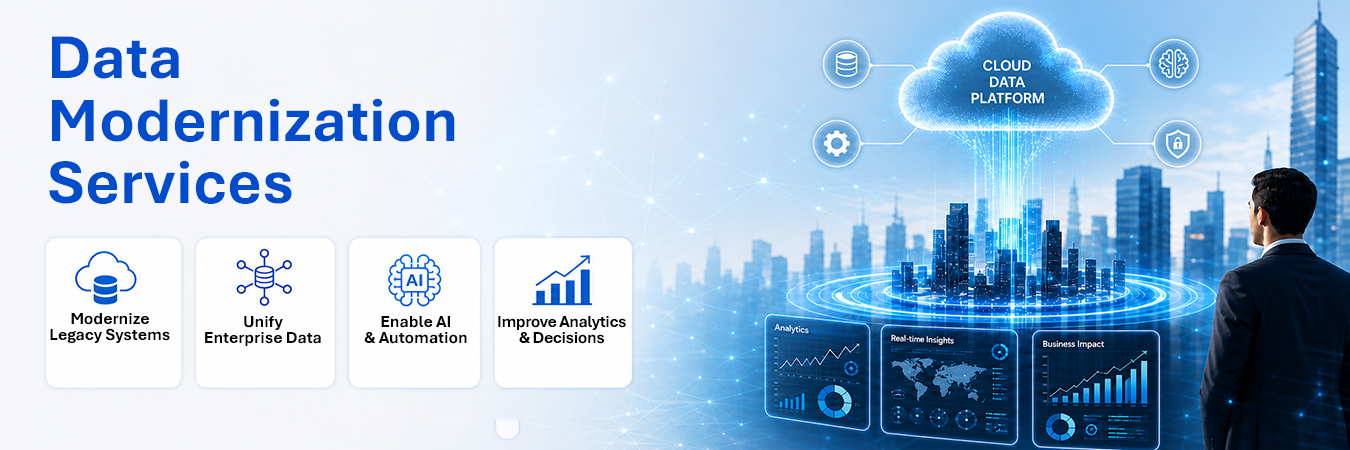
How Data Modernization Services Enable AI, Analytics, and Better Decision-Making
In today’s data-driven business environment, organizations generate and process vast amounts of information every day. However, many businesses still rely on outdated systems, fragmented databases, and legacy infrastructures that limit their ability to extract meaningful insights. As artificial intelligence (AI), advanced analytics, and real-time decision-making become critical competitive advantages, organizations must ensure that their data ecosystems are ready to support these innovations.
This is where data modernization services play a transformative role. By upgrading legacy systems, integrating data sources, improving data quality, and creating scalable data architectures, businesses can unlock the full potential of their data assets. Modernized data environments enable organizations to leverage AI technologies, improve analytics capabilities, and make informed decisions faster and more accurately.
In this blog, we will explore how data modernization services helps businesses accelerate innovation, enhance operational efficiency, and build a future-ready data foundation.
Understanding the Need for Data Modernization
Many organizations have accumulated large volumes of data over the years. Unfortunately, this data is often stored across multiple systems, applications, and formats that were never designed to work together. As a result, businesses face challenges such as:
- Data silos across departments
- Limited visibility into business operations
- Poor data quality and consistency
- Slow reporting and analytics processes
- High maintenance costs for legacy systems
- Difficulty implementing AI and machine learning initiatives
Without modernizing their data infrastructure, organizations risk falling behind competitors that can access real-time insights and rapidly adapt to market changes.
Data modernization services focuses on transforming legacy data environments into agile, scalable, and intelligent ecosystems capable of supporting modern business requirements.
Why Businesses Need Data Modernization Solutions?
Modern organizations require flexible and scalable systems that can handle growing data volumes while supporting advanced technologies. Data modernization solutions help businesses achieve these objectives by creating a unified and accessible data environment.
Key benefits include:
1. Improved Data Accessibility
Modernized systems centralize and integrate data from various sources, making it easier for employees, analysts, and decision-makers to access accurate information when needed.
2. Enhanced Data Quality
Data modernization services initiatives often include data cleansing, standardization, and governance frameworks that improve the reliability of business information.
3. Better Operational Efficiency
Automated workflows and streamlined data management processes reduce manual efforts and enable teams to focus on strategic initiatives rather than administrative tasks.
4. Increased Scalability
Modern cloud-based architectures allow organizations to scale resources according to business needs without significant infrastructure investments.
5. Stronger Security and Compliance
Modern data platforms modernization incorporate advanced security controls, encryption mechanisms, and compliance frameworks that help organizations protect sensitive information.
By implementing comprehensive data modernization solutions, businesses can create a strong foundation for digital transformation initiatives and future growth.
How Data Platform Modernization Supports AI Adoption?
Artificial intelligence relies heavily on data availability, quality, and accessibility. Organizations often struggle to deploy AI initiatives successfully because their existing data infrastructure cannot support the requirements of AI models and machine learning algorithms.
Data platform modernization addresses these challenges by creating a robust environment that enables AI-driven innovation.
1. Unified Data Ecosystem
AI models require access to large datasets from multiple business functions. Modernized platforms integrate structured and unstructured data sources into a centralized ecosystem, ensuring that AI applications have access to comprehensive information.
2. Real-Time Data Processing
Modern data platforms support real-time data ingestion and processing, allowing AI systems to generate timely insights and predictions.
3. Improved Data Accuracy
Machine learning algorithms perform best when trained on high-quality data. Modernization efforts help eliminate duplicate, incomplete, or inaccurate records that can negatively impact AI performance.
4. Scalable Infrastructure
AI workloads often require substantial computing resources. Modernized cloud-native platforms provide the scalability needed to handle large datasets and complex analytical models.
5. Faster AI Deployment
With integrated data pipelines and automated workflows, organizations can accelerate AI model development, testing, and deployment.
As AI becomes increasingly important across industries, data platform modernization serves as a critical enabler for successful AI implementation.
The Role of Data Platform Modernization Services in Advanced Analytics
Analytics has evolved far beyond traditional reporting. Businesses now rely on predictive analytics, prescriptive analytics, and real-time business intelligence to gain competitive advantages.
Data platform modernization services help organizations build the infrastructure necessary to support advanced analytics initiatives.
Centralized Data Management
Modern data platforms consolidate information from multiple systems into a unified repository, enabling comprehensive analysis across the organization.
Self-Service Analytics
Modernized environments empower business users to access dashboards, reports, and analytical tools without relying heavily on IT departments.
Faster Insights
Advanced data architectures significantly reduce data processing times, allowing organizations to generate insights more quickly.
Predictive Analytics Capabilities
Modern platforms support sophisticated analytical models that can forecast trends, customer behaviors, and business outcomes.
Enhanced Collaboration
Centralized data environments improve collaboration between departments by providing consistent and reliable information across the organization.
Organizations that invest in data platform modernization services can transform raw data into actionable intelligence that drives business success.
Enabling Better Business Decision-Making Through Modern Data Platforms
Effective decision-making depends on timely, accurate, and relevant information. Legacy systems often create delays and inconsistencies that hinder decision-making processes.
Modernized data environments empower organizations to make smarter decisions through:
- Real-Time Visibility: Executives and managers gain access to up-to-date information that reflects current business conditions rather than outdated reports.
- Comprehensive Business Insights: Integrated data platforms provide a holistic view of operations, customers, finances, and market trends.
- Reduced Decision-Making Risks : Improved data quality and governance help reduce errors and increase confidence in business decisions.
- Faster Response to Market Changes: Organizations can identify emerging opportunities and potential risks more quickly through real-time analytics.
- Data-Driven Culture: Modern data platforms encourage evidence-based decision-making across all levels of the organization.
When decision-makers have access to reliable and timely insights, they can respond more effectively to business challenges and opportunities.
Key Components of Successful Data Platform Modernisation
Organizations seeking long-term value from modernization initiatives should focus on several critical components of data platform modernization while adopting the right data modernization solutions.
- Data Integration: Connecting data from multiple sources ensures seamless information flow throughout the organization.
- Cloud Migration: Moving data workloads to cloud environments improves scalability, flexibility, and cost efficiency.
- Data Governance: Establishing governance policies helps maintain data quality, consistency, security, and compliance.
- Automation: Automated data pipelines and workflows improve efficiency while reducing manual intervention.
- Advanced Analytics Infrastructure: Building support for AI, machine learning, and business intelligence tools enables organizations to maximize data value.
- Security and Compliance: Modern platforms should incorporate robust security controls to protect sensitive information and meet regulatory requirements.
A comprehensive modernization strategy addresses all these areas to create a sustainable and future-ready data ecosystem.
Common Challenges in Data Modernization Projects
While the benefits are significant, organizations often encounter challenges during modernization initiatives, including:
- Complexity of legacy systems
- Data migration risks
- Resistance to organizational change
- Data quality issues
- Integration difficulties
- Skills and resource limitations
Successfully navigating these challenges requires careful planning, stakeholder involvement, and collaboration with experienced technology partners.
A phased modernization approach often delivers better outcomes by minimizing disruptions while allowing organizations to achieve incremental improvements.
Connect with Us for Data Modernization Services
At FidelSoft, we provide data modernization services and data modernization solutions that help organizations transform legacy data environments into modern, scalable, and intelligent platforms that support business growth and innovation.
Our data modernization expertise includes:
- Legacy system assessment and modernization planning
- Cloud migration and data transformation
- Data integration and consolidation
- Data governance implementation
- AI and analytics enablement
- Enterprise data architecture modernization
- Business intelligence and reporting optimization
Our team works closely with clients to develop customized modernization strategies that align with their business objectives and technology roadmaps.
By leveraging industry best practices and advanced technologies, FidelSoft helps organizations unlock greater value from their data assets while preparing for future digital transformation initiatives.
Partner with FidelSoft for End-to-End Data Modernization
Whether you are planning cloud migration, upgrading legacy systems, implementing AI-driven analytics, or transforming your enterprise data architecture, FidelSoft provides comprehensive data modernization expertise to help you achieve your goals. Connect with our team to build a future-ready data platform that accelerates innovation, improves decision-making, and drives sustainable business growth. Connect with us at sales@fidelsoft.com.
Ref. No – FB06261007